Why an undersupplied market doesn't necessarily mean there's demand
Current market supply is a key indicator to factor into your underwriting when assessing if a site is viable for development or conversion. However, it's not the only indicator you should use to decide whether to enter the market. Sometimes supply doesn't tell the full story, and you need to weigh other factors to protect your downside. Supply, demand, economics, competitive intensity, competitive performance, future supply, and site economics should all play a part in your decision to enter a market, so you're not blinded by an attractive (or unattractive!) supply per capita that doesn't tell the full story.
Supply
I came across a warehouse in Warwickshire that looked primed for self-storage. It had a population of over 80,000 within 5 km of the site and 90,000 within 8 km, with steady population growth of 1.28% a year. The average household income was £48,000, which is far higher than the UK average. I found a prominent off-market industrial unit, but it was located close to a competitor site on the same road. At first, I thought this wouldn't be an issue due to heavy traffic and low supply per capita of 0.43 sq ft (far below the UK average). So I decided to do some digging.
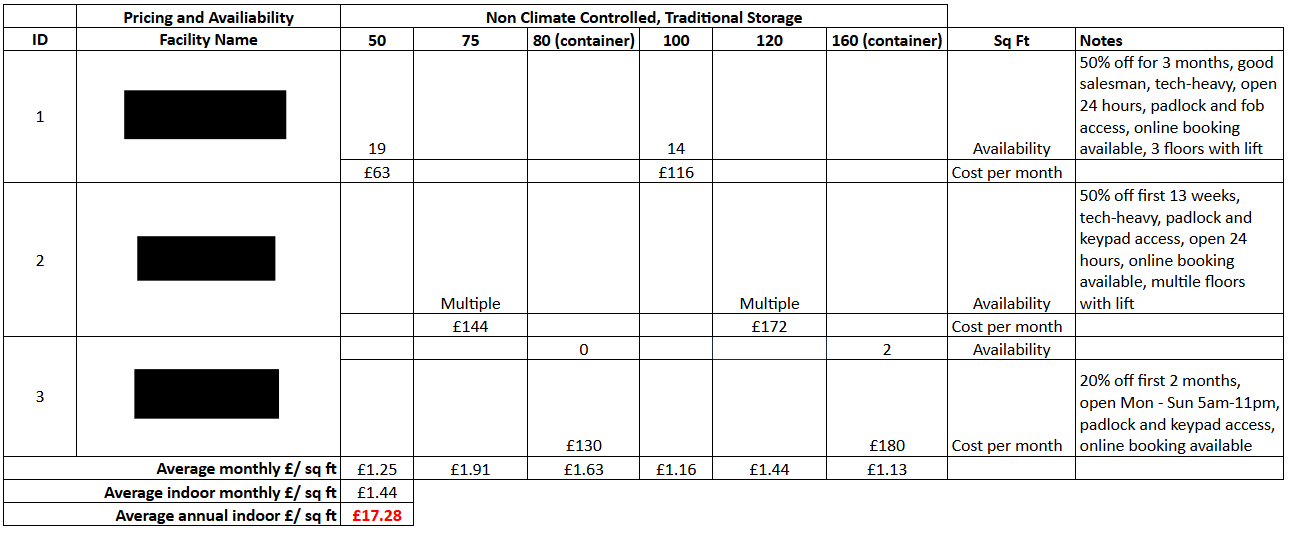
I started by calling around the competitor sites to see what units they had available. One site had nineteen 50 sq ft units available and fourteen 100 sq ft units (big red flag!). The average annual indoor price per square foot was also quite low at £17.28. I wondered whether the low occupancy could be a red herring, as the site may have opened recently so I called a few more competitors. They also had multiple units available in similar sizes.
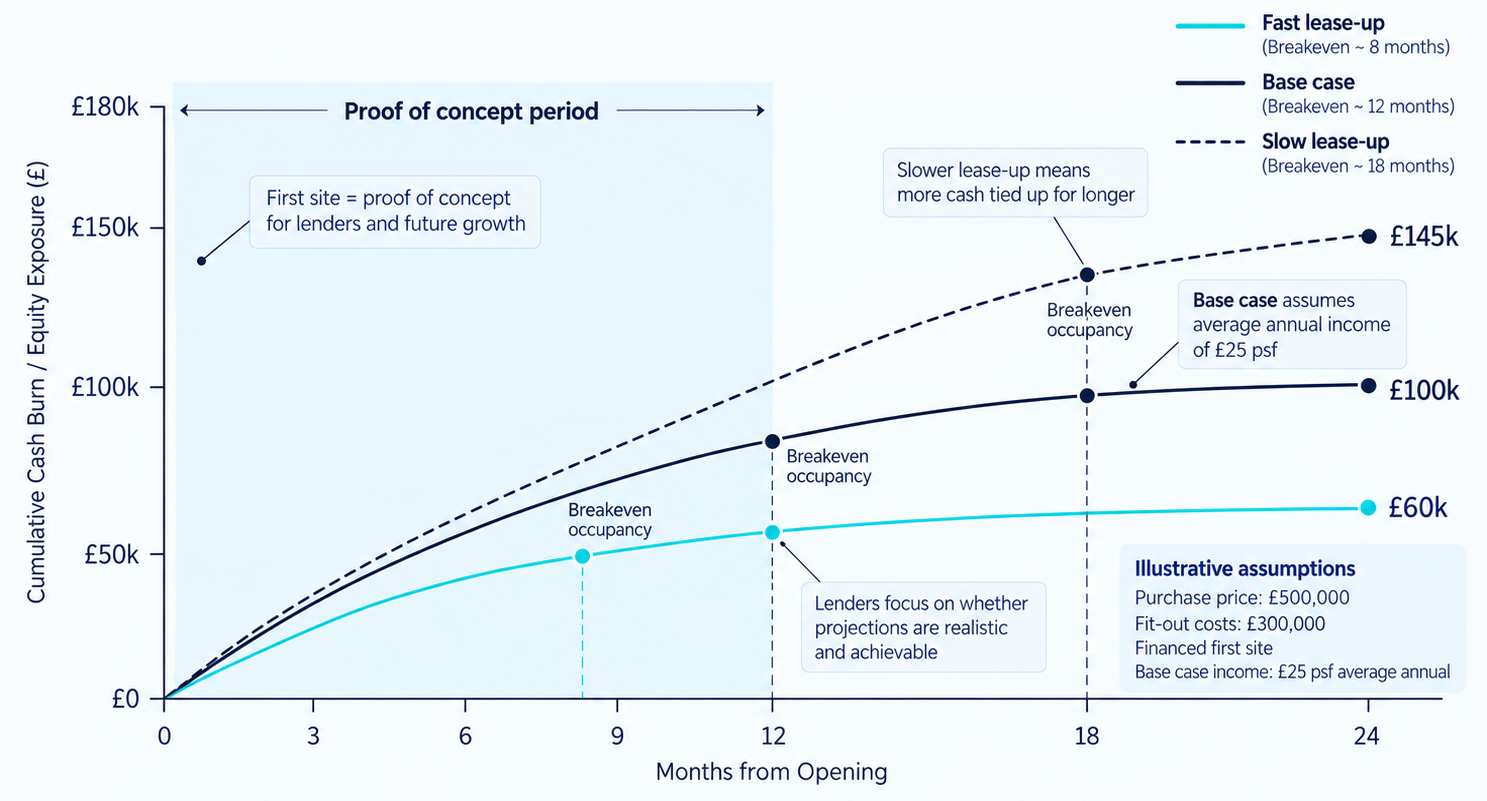
When setting up a new self-storage site, lease-up risk is a significant element to factor into your underwriting, especially when using finance. Lenders want to know your financial projections are achievable and deliverable. Your first site is effectively a proof of concept for you as an operator, so getting it right the first time is essential. You're investing a significant amount of capital into the purchase and fit-out costs so spending some time shopping the market is a no-brainer.
Demand
I saw a site advertised in Norfolk that was self-contained, had very high eaves (over 8 metres!) and was being sold at a very cheap cost per square foot of £35. There was also only one other indoor self-storage competitor within 8km. The site had also been on the market for a long time, which was odd. So I looked at the local market demographics. The market only had 6,000 people within 5km and a low average household income of £32,000. Low household income, a small local population or poor arterial access could indicate why there's low demand for the service you're offering. I always analyse markets fully before making an offer as developing in the wrong market isn't something that can be fixed (you can’t pick up and move a warehouse easily!). Don't rely on one market indicator in solation either as a market with low household income could be stronger in other fundamentals so factor in everything before you decide.
How fast a market's population is increasing or decreasing should be factored into your market analysis. Markets where the population is growing mean that the supply per capita is shrinking each year if no new sites are being developed. On the other hand, if it's shrinking at the same rate, supply per capita is increasing over time. This means over a long period it could eventually become oversupplied without any new sites being built.
Market Economics
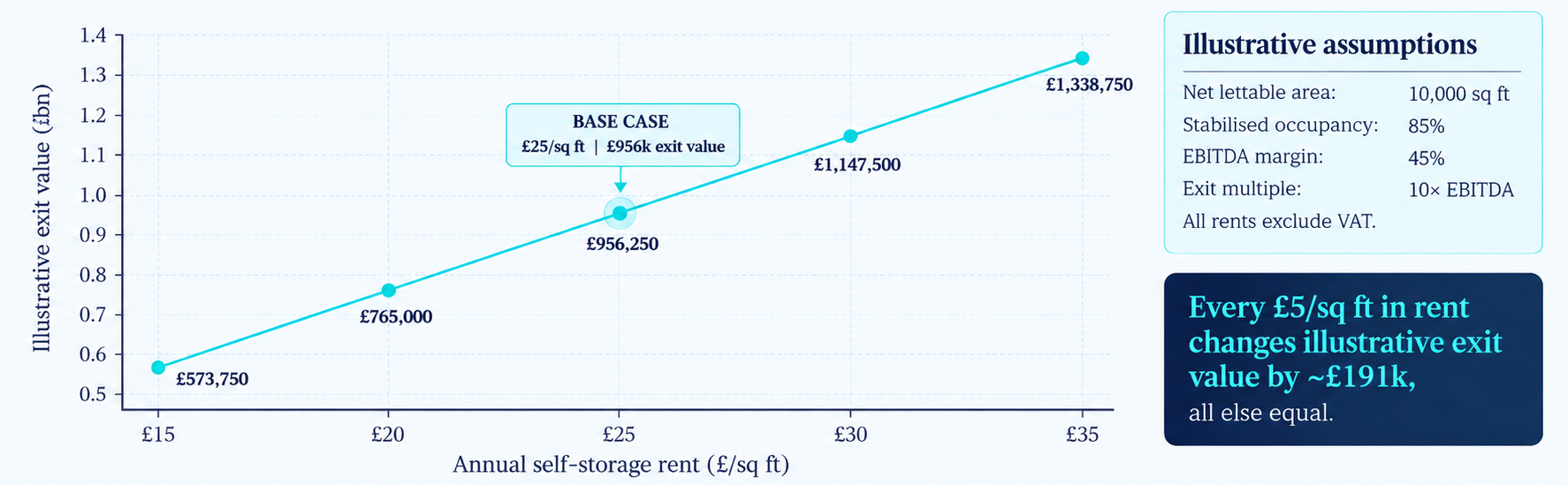
I came across an industrial unit in a market in Yorkshire that on paper looked like a pass. Publicised industrial rents were coming in at £20/sq ft, which is low for a secondary market, and the unit itself was on the smaller side at around 7,000 sq ft without a mezzanine. So I decided to shop the local market to see if I was seeing the full picture. Indoor units came in at £28-£32/ sq ft and most popular unit sizes were sold out. This alone created a significant increase in the site's projected exit value. With the additional value-add from a mezzanine to lettable area this site was now very viable.
Competitive Intensity
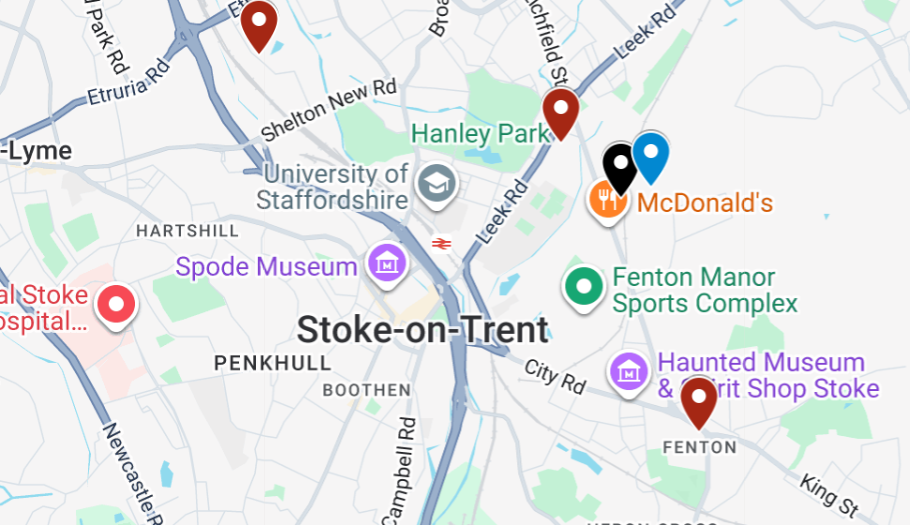
I came across an industrial unit in Stoke-on-Trent (blue pointer above) that was advertised on the open market and being sold at an attractive cost per square foot (£45 / sq ft!). I searched the local market and found a big self-storage operator sat within the same estate (black pointer) with superior road frontage and it was offering heavy discounts for new customers. It's always advantageous to keep track of how many of these big players are in a chosen market and the discounts they're offering so you know what you're up against. Target a gap in the market they're not filling and reduce your lease-up risk as a result.
Competitive Performance
I came across an industrial unit in an established market in Yorkshire located in a busy industrial estate so decided. After speaking to four operators in the local vicinity, I found they had multiple units available in multiple sizes. Availability of units is a signal, however, rather than proof of weak demand.
Before making an offer I always call local self-storage operators within 8 km to see which unit sizes they have available and how many they have left. If they only have one or two units available in popular unit sizes such as 50 sq ft and 100 sq ft, this can be an indicator that market hasn't yet reached saturation. On the other hand, if there are multiple units available in multiple sizes, this can be a sign the market is reaching saturation. This can be a red herring, however, especially with sites that may have only opened recently.
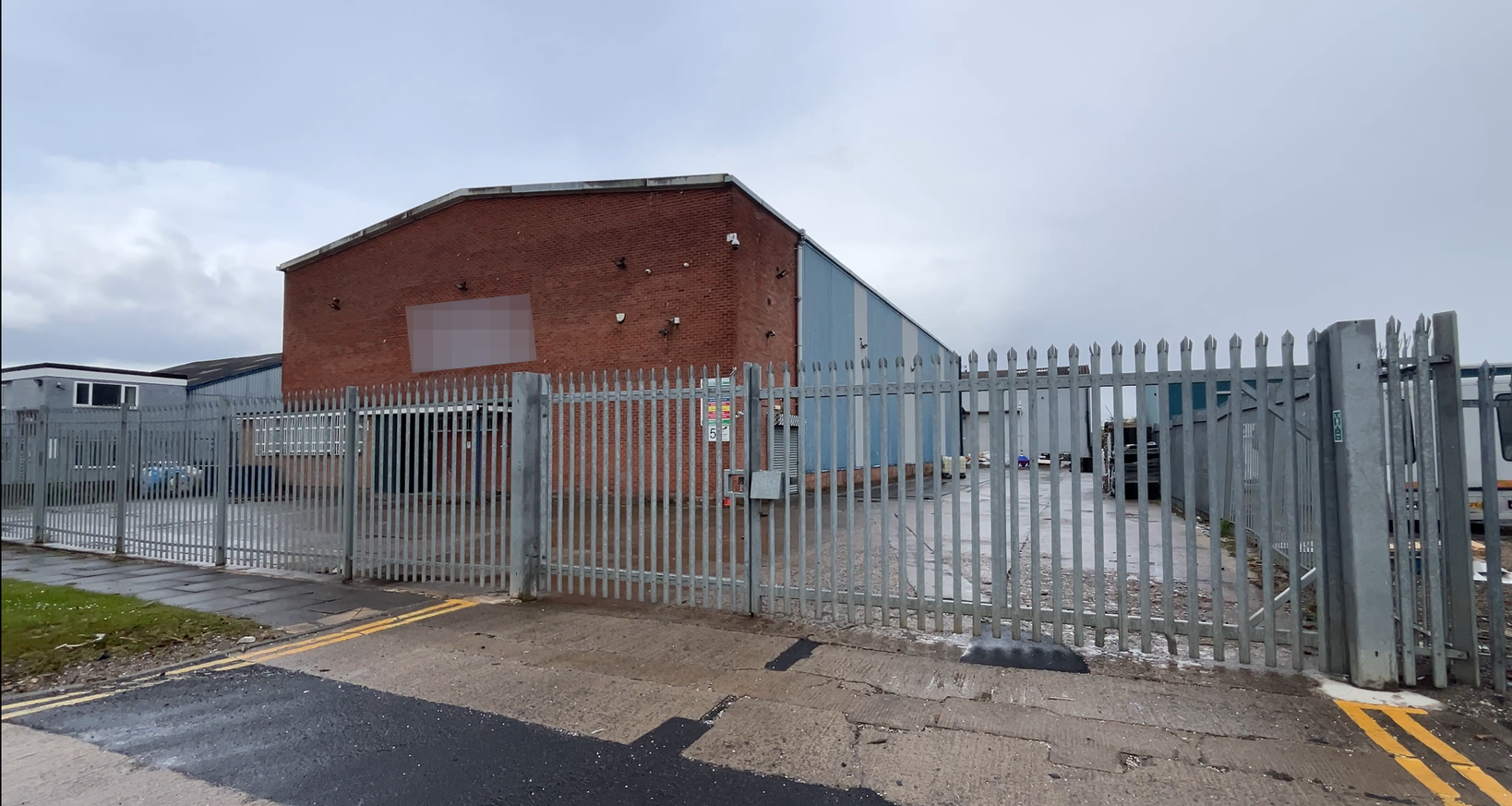
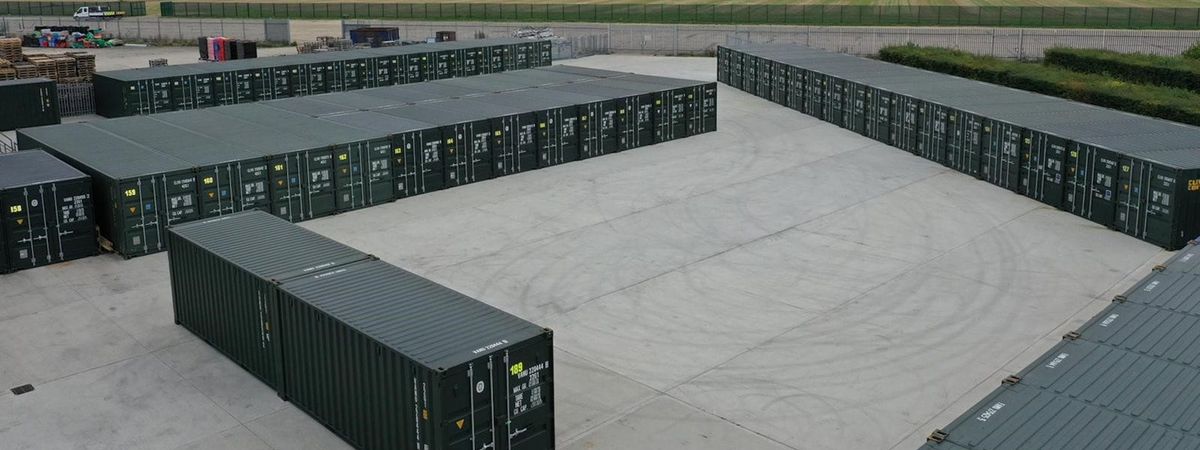
I visited a larger site in the north east of England that had two 10,000 sq ft warehouses with eaves over 8 metres and room for expansion on the exterior. When I called around operators in the local area, I couldn't understand why they had low occupancy, as there was a good-sized population and only 2 indoor incumbents, but multiple competitors with container storage. Due to both of these being different storage products, you could argue that the market could still absorb the other product if it's undersupplied but this can be a grey area. I also found out one of the indoor competitors was for sale and only partly fitted out and not fully occupied, which was another red flag. I deemed it was too risky and moved on.
Future Supply
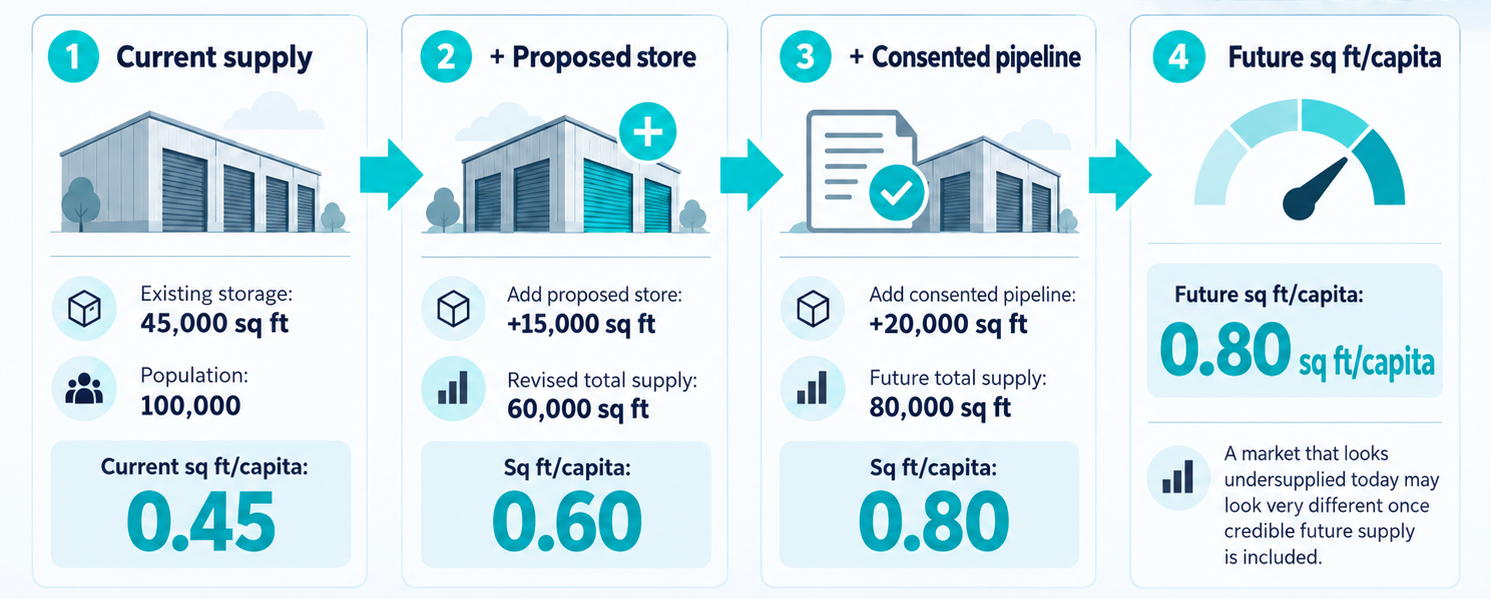
I was looking to convert a site in the Midlands that had a population of 25,000 within 5 km and a few incumbents already in the market. The site would have had a net lettable area of 15,000 square feet, so I wanted to know what the market square feet per capita would be once the site was in operation. Due to the current market having 1 square foot per capita it was already slightly above the national average and once in operation the site would have increased this to 1.2. As well as the current square foot per capita, it's smart to work out what the future square foot per capita will be once you've developed or converted a given site. You want to know whether the market can absorb the supply your store will provide.
The market also had an existing planning application approved for a change of use to B8 Self-Storage for 10,000 sq ft. Factoring this in on top of the supply I would be bringing the market, the supply per capita was now well over the national average. It was borderline oversupplied which made the deal far more risky than it first appeared. I always check local planning applications to see upcoming changes of use for self-storage as you don't want to be competing with a new store for customers during opening.
Site Economics
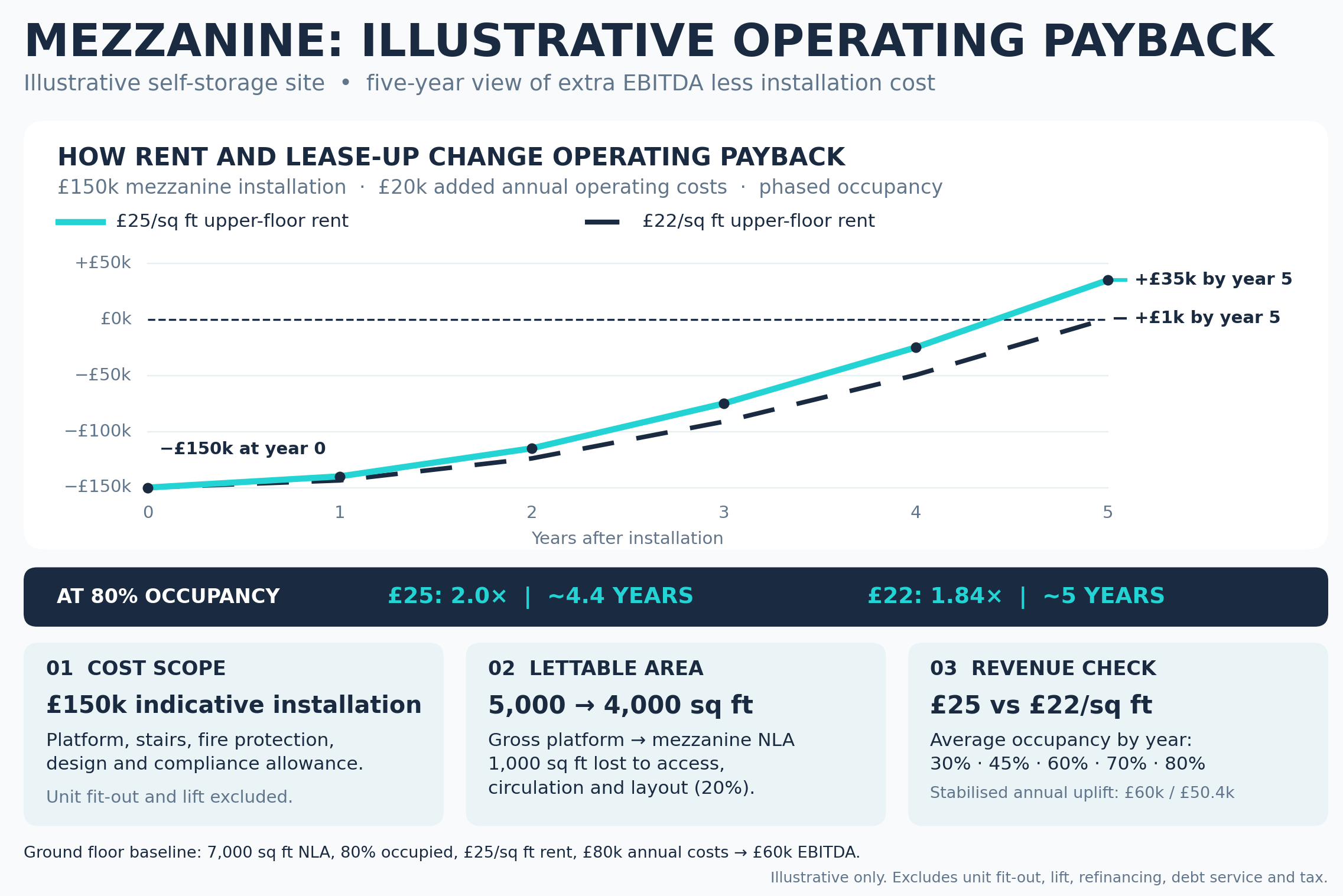
The opposite can also be true when markets have low rents. I was interested in an industrial site in a city in the Midlands that looked undersupplied (0.21 sq/ft per capita!), but the household income was only £31,000, which set off a few alarm bells. This is especially relevant for sites with eaves under 5.5 metres that don't have mezzanine viability or only part-mezzanine viability. A site that's under 10,000 sq ft with no mezzanine viability and low rents can be difficult to generate enough EBITDA for lender comfort (and your own). I typically set an EBITDA threshold of at least £100k per site as I want to make sure there's enough income to support operations, a member of staff, improvements to technology over time and unforeseen maintenance costs (such as a new roof!). You want to give yourself breathing room and having to be on site 24/7 because you can't afford staff isn't a scalable business model (you're effectively buying a job!).
Summary
Market supply is a useful initial first filter to explore whether a given market has potential but don't rely on it in isolation as it does not prove unmet demand. The behaviour of your competitors, how they're performing, what they're offering and whether there is a gap in market should also be taken into account. Future supply matters just as much as current supply, so factoring in planning applications and the impact of your new site is strategic. Additionally, even if there is genuine demand in a given market, a building that doesn't support the economics and wouldn't generate enough income due to its physical constraints should also be avoided. In order to validate a market, you need to factor in all of these market indicators before making a decision. Getting the location of your site right is very difficult to change, so going through this extra due diligence will help ensure you have solid customer demand now and in the future when a competitor inevitably opens up shop in a nearby catchment.
Market Screening Parameters
These thresholds should be used together as initial screening parameters that trigger further market investigation rather than being used to drop a market if one fails in isolation:
|
Metric |
Screening threshold |
|
Population within 5 km |
>25,000 |
|
Population within 8 km |
>50,000 |
|
Storage sq ft/capita |
≤1 |
|
Population growth |
≥0% |
|
Average annual household income |
≥£35,000 |
|
Competitor occupancy |
≥80% |
|
Competitor popular unit size availability (per size) |
≤3 |
|
Future supply (adjusted storage sq ft/capita) |
≤1 |
|
Achievable storage rents (price/ sq ft) |
≥£22 |
|
Projected EBITDA |
≥£100k |