How buyers accidentally train commercial agents to not take them seriously

“Have you got other commercial properties already?”, “So what's your background?”, these questions from agents are to be expected during viewings for commercial properties and your answers to help paint a picture of whether you're someone who executes or is a tyre-kicker.
Commercial property is very different from residential because its value is tied to its ability to support or generate income, whether that's through an owner-occupied business or a tenant paying rent to the landlord. Commercial properties are typically more limited in stock than residential, meaning demand is often high and speed is key.
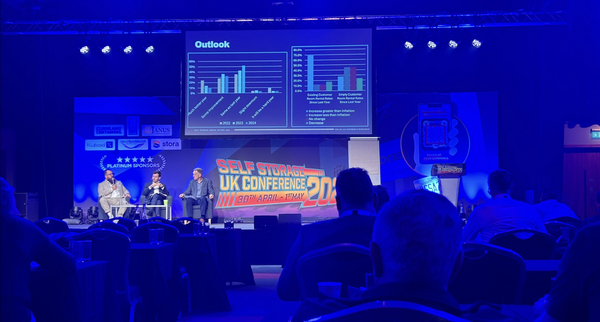
I was at a property conference and spoke to an investor who had hired a commercial property sourcer to find properties on his behalf as agents weren't returning his calls (not the guy in the DeLorean above!). This made me think about the calls I'd had with agent's and gatekeepers at commercial agencies and how each question was an effectively a seriousness filter (a bit like a first date, when you're asked, “are you looking for something long-term?”). “What's your intended use for the site?” for example is a classic example of where hesitation and vagueness digs your own grave. Knowing whether you're an investor or owner-occupier and having a solid repeatable business plan will help you get past this first hurdle.
Why agents don't return your calls
Early on, I found I was calling multiple agents and leaving messages with gatekeepers and the number of agents getting back to me was far lower than residential. The reality is, there are often numerous buyers calling in and leaving messages which gatekeepers with no context, intended use, business name, email address, questions (you see where I'm going with this…). Agents are busy people and are typically only at their desks for a limited amount of time per day and frequently out on viewings or surveying sites to be marketed. If you want to have an edge over the competition, calling and leaving an email the same day (with your business and contact details in your signature!) will put you ahead of many buyers calling in and position yourself as someone serious who warrants a fast response.
How buyers accidentally train agents to not take them seriously
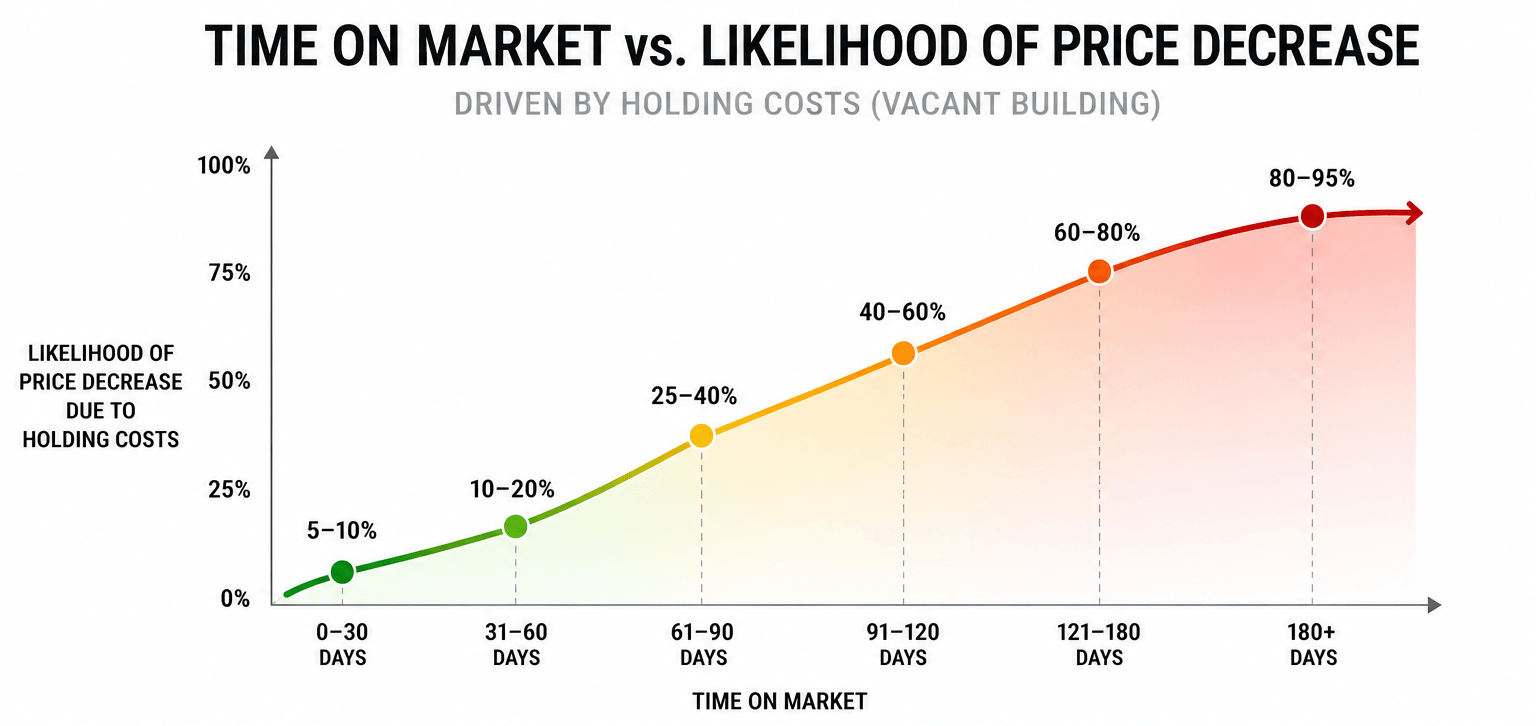
When you do eventually get an agent on the phone, having questions ready that help you underwrite whether it's a viable candidate for a viewing are also key. The owner's situation and whether the site is being sold vacant will help you position your offer. If it's being sold vacant they may want a fast sale due to holding costs vs. an owner-occupier may want to wait and see how many offers they can get collect first. How long the property has been on the market also gives you an indication of how hot the property is and how fast you need to move to get an edge over competing buyers. Here are some key questions to ask during the call (don't turn it into an interview and keep it lean!):
- ☐ What is the situation with the owner, and what's prompting the sale?
- ☐ Has there been much interest or any offers?
- ☐ Can you confirm the clear eaves and apex heights?
- ☐ What's the current use?
- ☐ Any roof/ asbestos/ structural issues I should be aware of?
- ☐ What's your availability for viewings?
Properties that are new to market
“There's a lot of interest from investors and owner-occupiers” and “Bids are significantly over asking” are statements you'll likely come across with properties that are new to market in desirable locations. Whilst it's comforting to know that the property is in demand, this is also where many buyers can trip up. When a property goes to best and finals, and agents ask for your highest bid you have to be cautious. Before immediately moving to the end of your offer range or abandoning your underwriting, use this as a way of discovering the vendor's motivation and timelines.
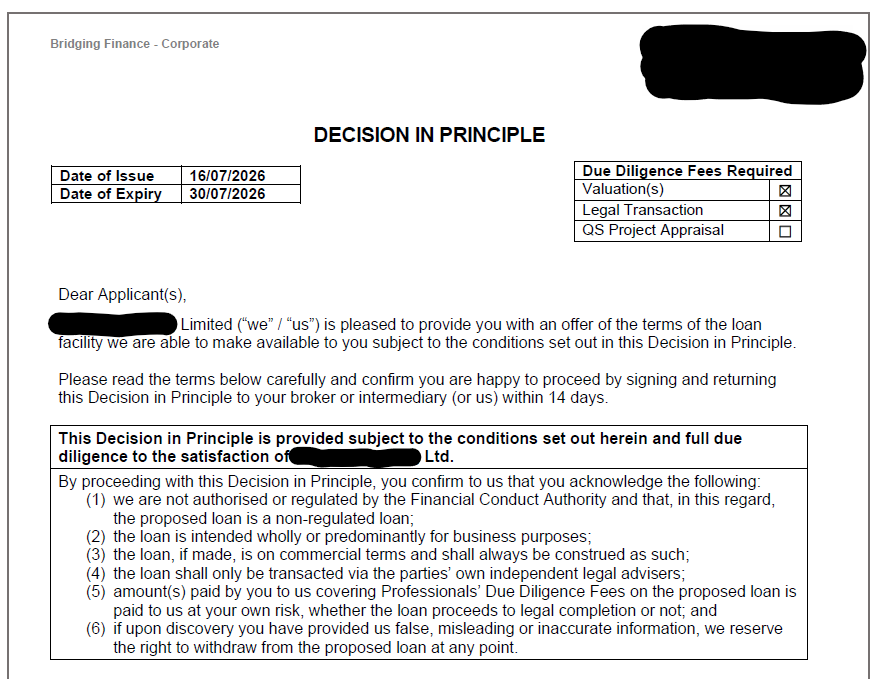
Every owner's situation is different and finding out what it is during the first enquiry is beneficial. Has the owner's business gone into administration and is the sale being dealt with by a bank? In this case, certainty of completion may be more important than the highest price. Is it being sold by multiple trustees who aren't aligned on price? Getting an agreement in principle, communicating that you have a solid business plan and that you can move quickly can give you an edge over higher bidders.
Funding and proof of ability to transact
In property (for agents and vendors, especially!) cash is king. You may get a buyer with a lower offer, but if it's an all cash offer it may get accepted over higher bids. This is because the offer will be lower risk for the vendor and the agent as there's no lender due diligence and the buyer is able to transact much faster. Finance, however, gives the buyer more velocity with their money as less capital is trapped in the deal.
A way of re-assuring agent's that you can complete is getting an agreement in principle early on from your lender and including this as part of your offer. Proof of funds for your deposit contribution also makes a big difference. Agent's want to know that you can transact, and proving you have funds ready and are financeable will help give them this confidence. If your purchase is dependent on another property being sold, there is also chain risk to be factored in. The fewer variables that impede the sale, the more competitive and attractive your offer will be to an agent and the vendor.
Making an actual offer

Another area that is often missed is actually making an offer on a property. A lot of buyers get scared away from a high headline price, but the reality is that a property is only worth what someone is willing to pay for it. Owners will frequently test the market at a price that is far above market value to see what the response will be. A trap buyers regularly fall into is taking this at face value. Use your underwriting to put together an offer that makes sense for your business model, your intended use and your projected return not a fantasy price that's being tested. You'll typically find that lower offers are rejected initially, but the owner comes back 4–6 weeks later once reality has set in.
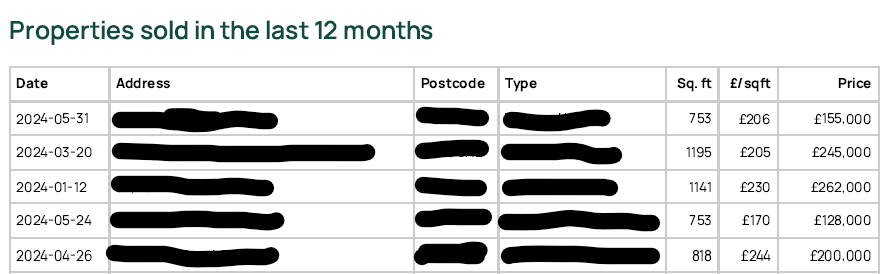
This isn't to say not to make your offer competitive, but make sure to check local comparables first. Remember that if you're using finance, the bank will value the property, and if there's a gap you will be the one plugging it with cash. A valuation gap doesn't automatically mean it's a bad deal, you may see a value-add opportunity that others don't. Factoring this in early on to your underwriting and ensuring you have liquidity to plug any obvious gaps will ensure you don't get any nasty surprises.
Viewing information extraction
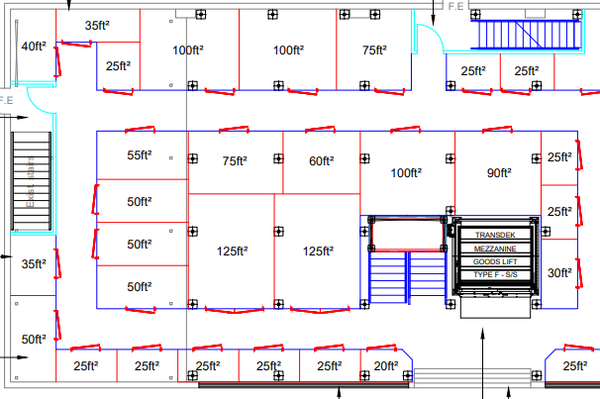
Knowing what your extracting from the viewing is critical to your offer and whether you're taken seriously by the agent (remember it takes two to tango!). Prepare your questions in advance and make sure you only extract key info (agents don't like been interviewed for half an hour). For example, if your plan is to install a mezzanine, what are the eaves and apex heights in the building? One of the biggest capex items on commercial sites is roofing, when did the roof last have repairs done, is there a recent structural survey? Many older buildings have asbestos in-situ which can be expensive to remove, is there an asbestos survey available? Know what you need to extract and why, and it will make the viewing much easier.
Off-market opportunities

Why is it that some people are swimming in commercial property opportunities and others can barely scrape a viewing? This comes down to two things: credibility and rapport. Off-market or pre-market opportunities are the golden goose in commercial property, and they give you a significant edge over your competition.
You may ask why anyone would sell off-market and not bother with testing the market? This comes down to the owner's situation: they may not want their tenant's to know their marketing it publicly, staff becoming concerned with an upcoming sale or may need cash fast for another acquisition. I've been sent a multi-tenant site opportunity by an agent where the owner was worried about marketing the property in case tenants left during the marketing process. Another site I viewed I was asked by the landlord to say that I was an insurer if any of the tenants asked during the viewing!
Rapport, responsiveness and showing up
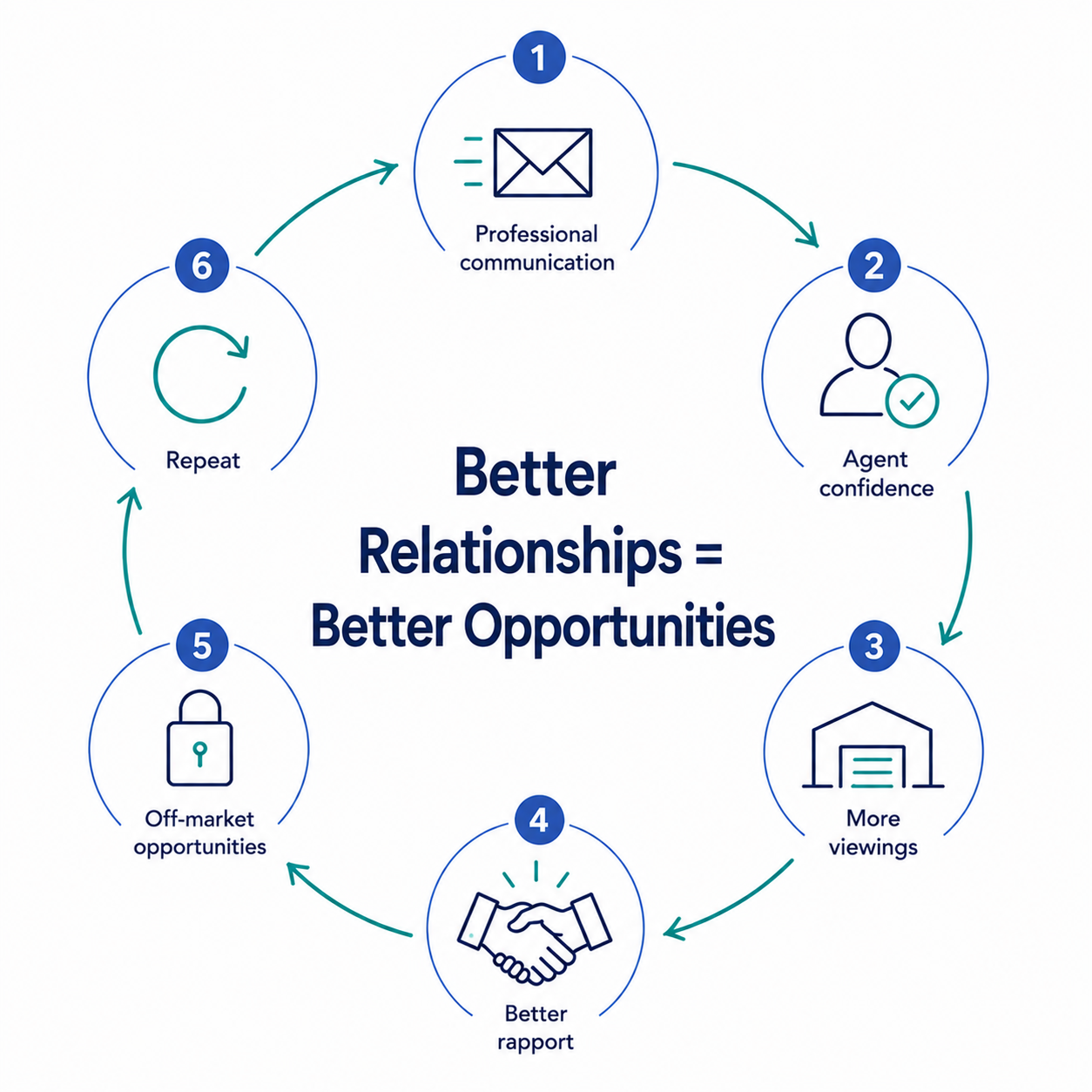
The lifeblood of commercial property is relationships. How you're positioned to the vendor by the agent directly correlates with how the agent perceives you as a buyer. Position yourself as someone credible but also don't forget to be nice! Having a great working relationship with agents makes the experience more enjoyable for everyone involved, so try to build a solid rapport and don't forget to try to enjoy the process (what's the point if you're not having fun!). Just how in sales people buy from people they like, the same can be said in commercial property: vendor's and agent's often sell to people they like! Replying to emails promptly and showing up to viewings on time and prepared will position you as someone who executes and may even get you a couple of off-market opportunities in the future.
Remember, agents want the sale to go through just as much as you do (everyone wins if it completes!). Whilst they may be interested in whether you like the property, whether you can actually complete on it is also being assessed. Reducing your perceived execution risk early on will make a world of difference in deal flow and offer acceptance. Don’t be afraid to make an offer, but make sure you're able to extract enough information to make the offer viable for your business model and projected return. The commercial property market can be a tough nut to crack, but every interaction you have with agent's and vendor's compounds over time resulting in more deals and better opportunities. This is a relationship game but also a data game and the two aren't mutually exclusive.